Study on the Use of Modern Educational Technologies by Ninth Grade and Intermediate-Technical-Diploma Students at Al-Amal Center (the Hope Center) for the Deaf and Hard-of-Hearing in Zawiya

Study on the Use of Modern Educational Technologies by Ninth Grade and Intermediate-Technical-Diploma Students at Al-Amal Center (the Hope Center) for the Deaf and Hard-of-Hearing in Zawiya
| Abdussalam Salim Masoud Al-Bosaifi z5973481@gmail.com |
Abstract
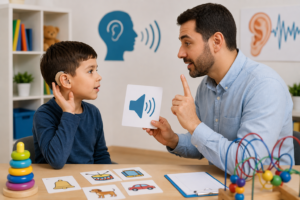
This study aims to identify the reality of the use of modern educational technologies by students with hearing disabilities, specifically ninth-grade students and first, second, and third-year students in various specializations at Al-Amal Center for the Deaf and Hard of Hearing in Zawiya.
The study embraced a descriptive analytical approach and utilized a questionnaire as a tool for data collection from a sample of 100 students. The data were analyzed using a range of statistical methods, including mean, standard deviation, percentage, relative weight, Pearson correlation coefficient, Cronbach’s alpha reliability coefficient, split-half reliability, and the T-test.
The results showed:
- A moderate level of agreement among the sample members regarding the use of educational technologies, reflecting a relative weakness in the employment of these technologies among the targeted group.
- The study also revealed significant statistical differences in the use of technologies attributed to the gender variable in favor of males, as well as differences related to the degree of disability in favor of the hard of hearing.
- The study recommends the need to enhance the use of modern educational technologies in educational programs targeting individuals with hearing disabilities and to provide training and technical support to both teachers and students.
Key words: reality, modern educational technologies, deaf, hard of hearing, ninth grade and intermediate technical diploma.