The Effectiveness of a Training Program Based on Social-Emotional Learning in Improving Social Interaction Among Children with Autism Spectrum Disorder
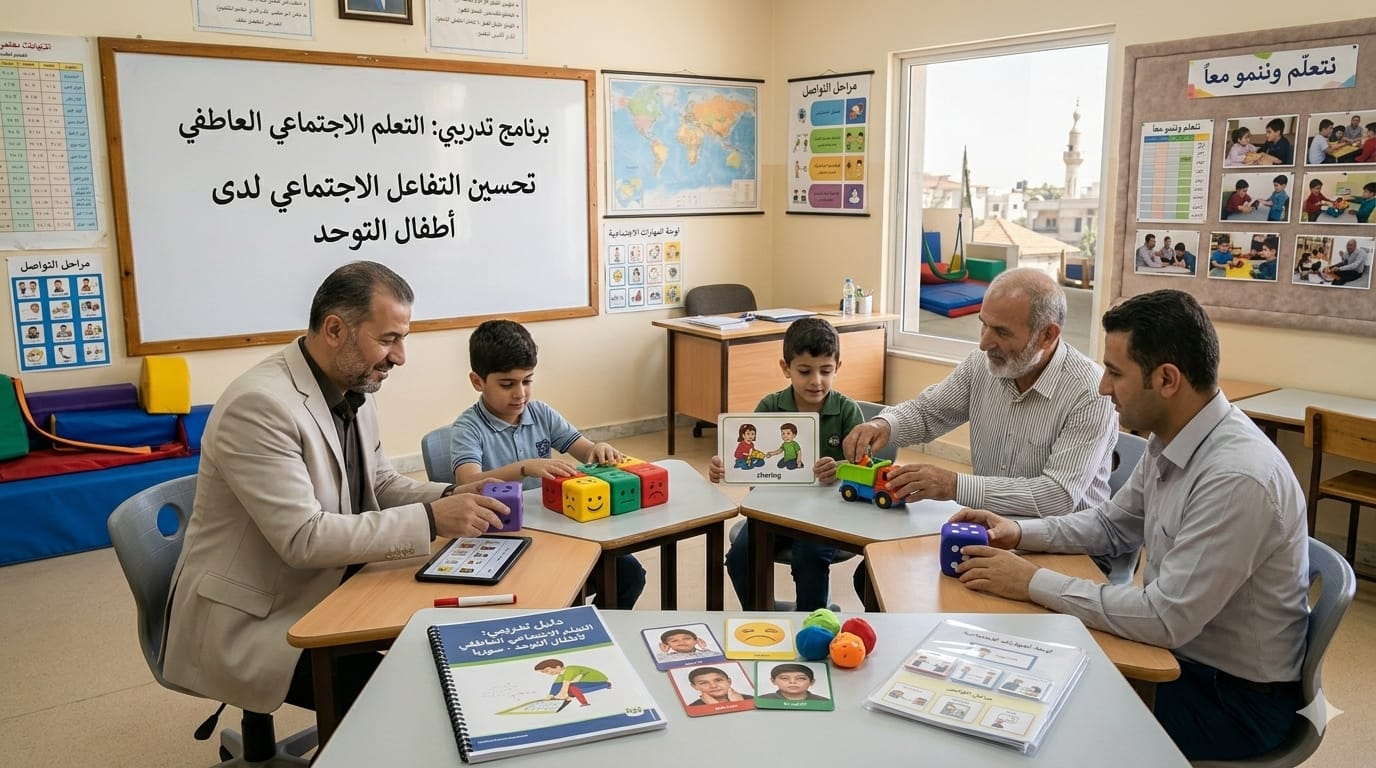
The Effectiveness of a Training Program Based on Social-Emotional Learning in Improving Social Interaction Among Children with Autism Spectrum Disorder
| Dr. Mahmoud Zayed Malkawi |
| Abdullatif Salih Shoubak abdulatifshobak@gmail.com |
Abstract
This study aimed to investigate the effectiveness of a training program based on social-emotional learning in enhancing social interaction among children with autism spectrum disorder (ASD). The researcher employed a quasi-experimental design using a single-group pre-test and post-test format.
The study sample consisted of 7 children (5 males and 2 females) purposefully selected from Ali ibn Abi Talib School (Special Education Department) in the city of Azaz, with ages ranging from 8 to 10 years. All participants had previously been diagnosed with mild autism and were verbal. The researcher used the Social Interaction Measurement Tool developed by Dr. Adel Mohamed Abdullah (2008). Data analysis was conducted using the Wilcoxon signed-rank test for related samples.
Results revealed statistically significant differences at the level of (a ≤ 0.05) in social interaction among all children. The effect size was calculated at 0.896, which indicates a large effect. These results suggest that the training program has significant practical effectiveness in improving social interaction among the participating children.
Key words: Effectiveness, Training Program, Social-Emotional Learning, Social Interaction, Autism Spectrum Disorder.